
Indoor vs Outdoor Murals: What Clients Should Know
People sometimes think painting a mural outdoors is as simple as showing up, looking at the wall, and saying, "Okay, yes, let's paint this."
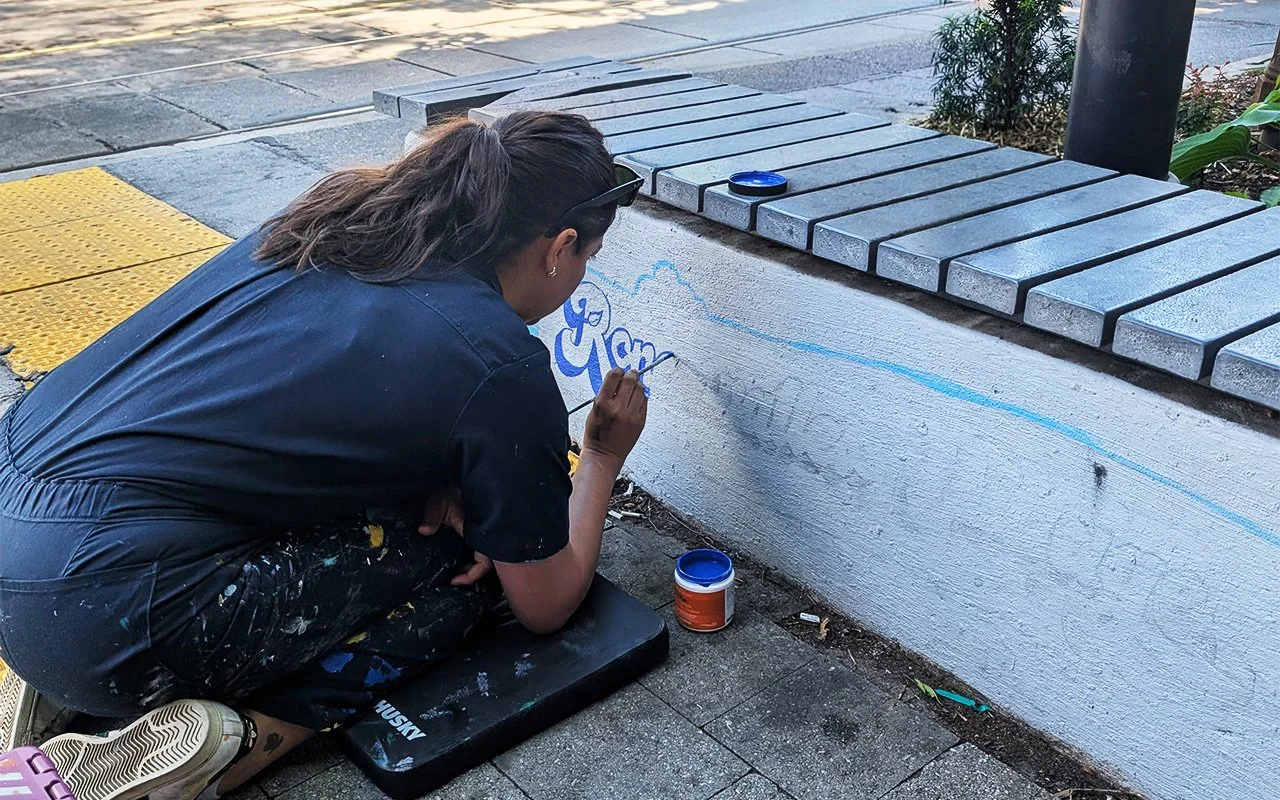
Outdoor murals need planning around weather, wall texture, materials, and safe access before the painting even begins.
I wish it were that simple. Outdoor murals are beautiful, but they come with a lot of planning that people do not always see. We have to consider the weather, the wall's texture, the height, the materials, the equipment, the safety requirements, and how the mural will survive outdoors once it is done.
Indoor murals also require planning, of course, but they usually raise a different set of questions. Instead of rain, wind, and wall damage, we might be thinking about ventilation, business hours, furniture, customer flow, or whether the materials are safe to use inside.
So yes, a mural is a painting, but it is also a project.
Outdoor murals need more than good weather.
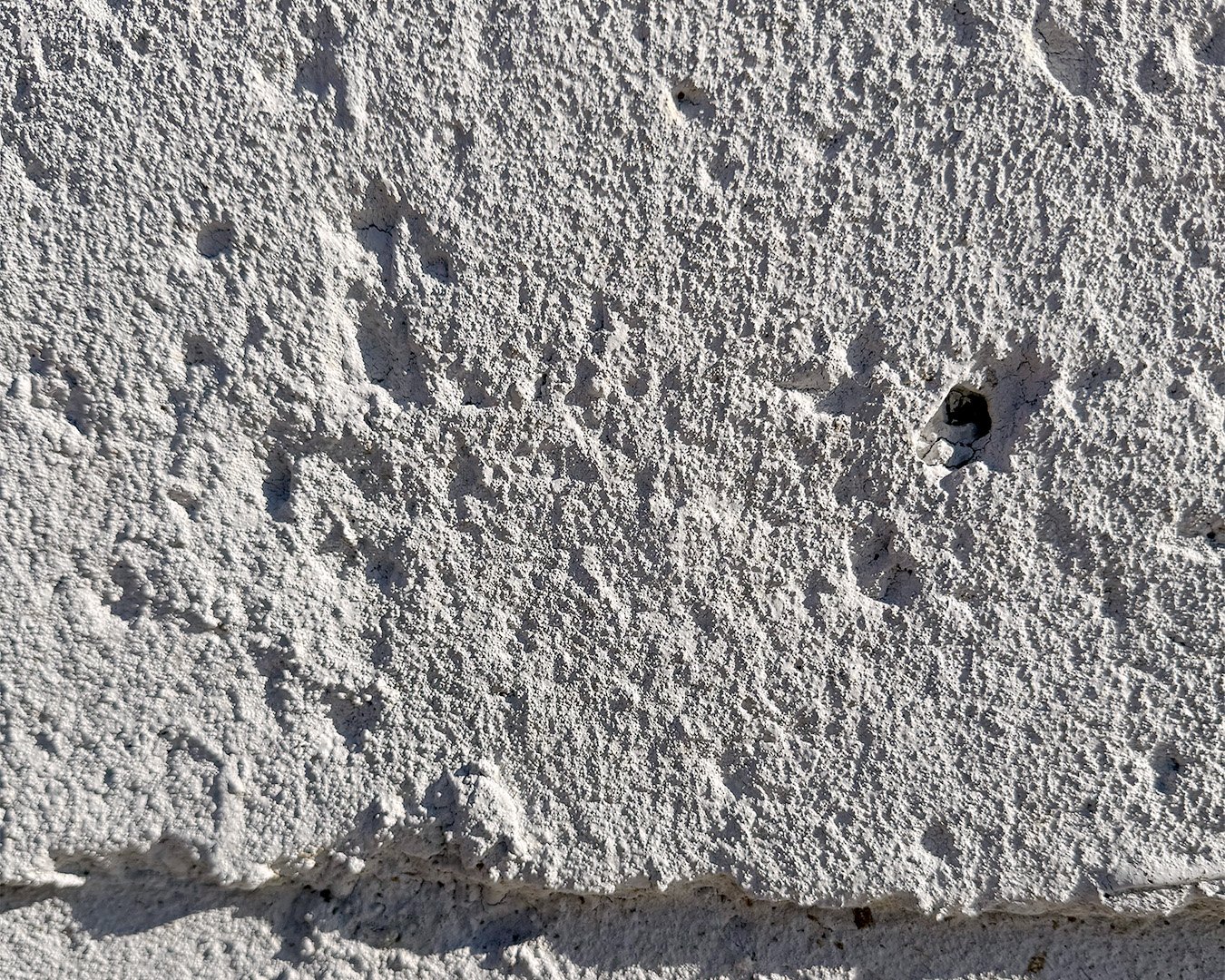
The wall's surface affects how much detail is possible and how the mural needs to be painted.
Weather is one of the biggest things to consider for an outdoor mural.
In Toronto, we cannot pretend the weather is always on our side. Rain, humidity, wind, cold temperatures, extreme heat, and direct sun can all affect the painting process. Paint and protective coatings often have temperature requirements, so outdoor murals are usually done during the warmer months.
An outdoor mural might look simple from the outside, but behind the scenes, many small decisions protect the final artwork. The wall needs to be dry, the surface needs to be stable, the paint needs to be appropriate for exterior use, and sometimes the mural also needs an anti-graffiti coating or protective finish.
The artwork still needs to be beautiful, but it also needs to survive real life. This is why timeline matters.
The wall surface changes the design.
Not every wall behaves the same way.
They all have their own personalities: Brick, concrete, stucco, metal, wood, and painted exterior walls. Some walls are smooth and easy to paint. Others are rough, porous, uneven, damaged, or full of texture.
That does not mean a textured wall cannot become a mural; it absolutely can, but the design has to respond to the surface.
A very detailed design with fine lines may not work well on a rough wall; clean lettering may take more time, and certain shapes may need to be simplified so they still read from a distance.
This is why I always need photos and, when possible, a closer look at the wall before giving a final quote or timeline. The wall itself provides much of the information needed before preparing an estimate.
Access is part of the project.
This is the part that surprises many clients. If a mural is high up, I need to reach it safely. That may mean a ladder, scaffolding, a scissor lift, or a boom lift. And no, a lift isn't just a fun extra artists ask for because we feel fancy. Lifts cost money, need to be booked, and require space and safe ground conditions. And if an artist is operating one, they need proper training and certification, as well as protective equipment.
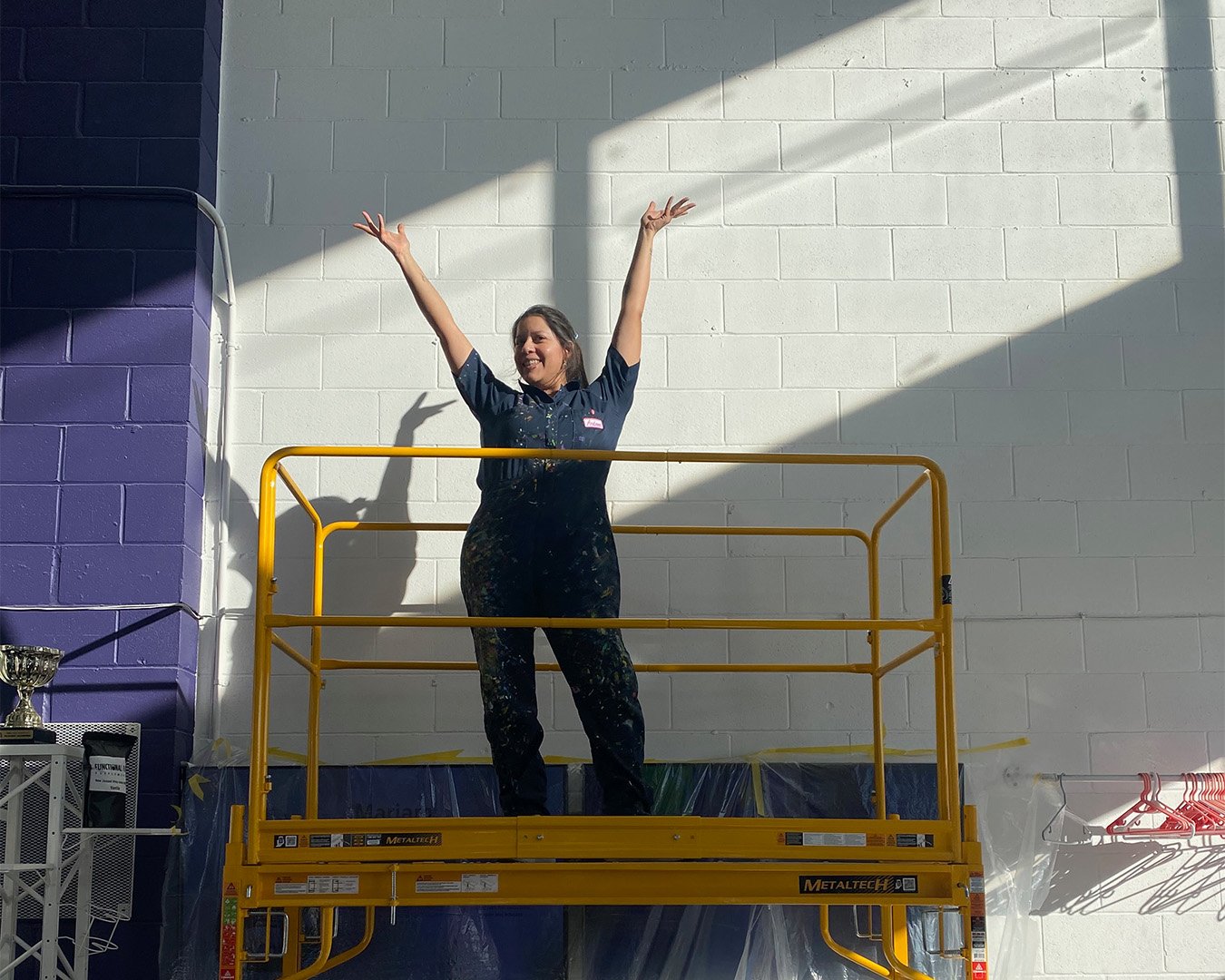
Access is part of the project. Tall walls often require proper equipment, training, insurance, and planning.
Also, the training costs money. I have had people ask about painting high exterior areas without wanting to pay for any equipment, which is just not realistic. I cannot magically float to the top of a building with a paintbrush in my hand.
Safety has to be part of the budget, and so does insurance. Just like materials, design fees, and project management. Those things are not separate from the mural. They are part of what makes the mural possible.
Indoor murals have different needs.
Indoor murals are usually easier in terms of weather and access, but they still require planning. We have to think about the space itself. Is the business open during painting? Will people be walking through? Does furniture need to be moved? Is there enough room to paint comfortably? Can the wall be reached safely?
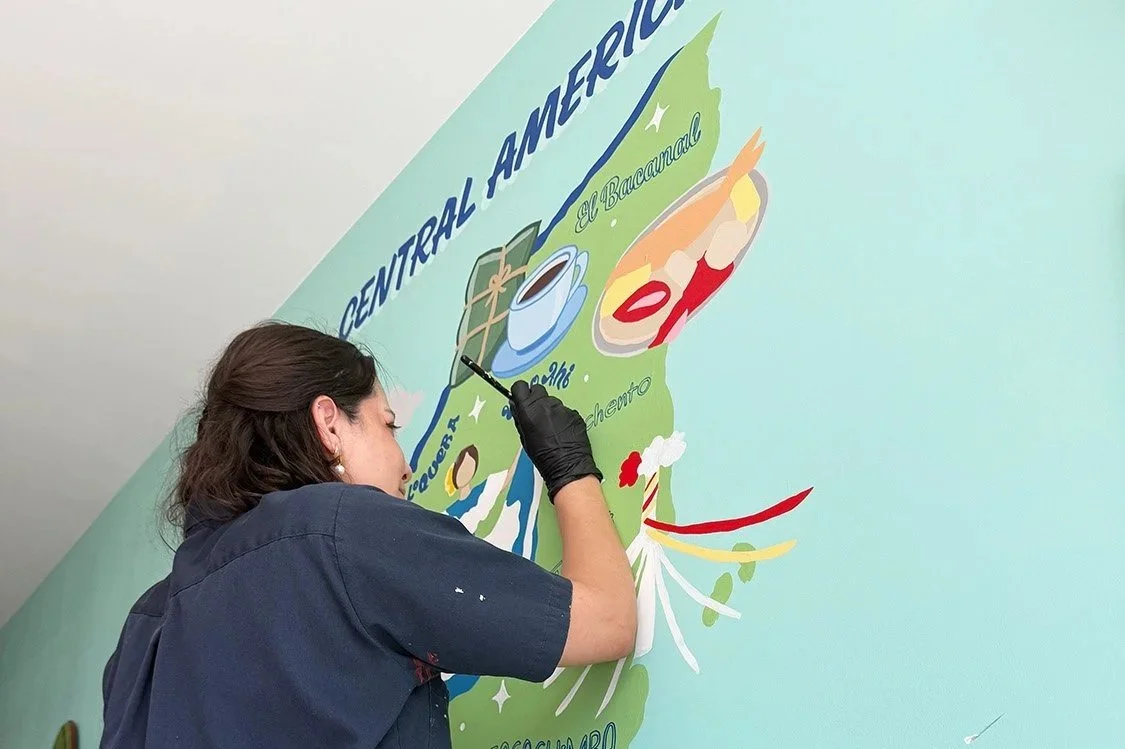
Indoor murals avoid weather issues, but they still need planning around timing, ventilation, materials, and how the space is used.
Materials matter indoors, too. For example, aerosol paint indoors is not something I take lightly. Without proper ventilation, it is not good for the artist, the people in the space, or the environment. Some artists use it indoors, and every project is different, but I prefer to be careful with materials that are toxic or require special conditions.
A mural should improve a space, not make it unsafe to be in.
Businesses may need a flexible schedule.
One thing I do love about indoor murals is that we can often work around a business's rhythm. If a café, restaurant, office, or shop cannot have painting happening during regular hours, I can sometimes paint after hours, in the evening, or around the client's schedule. I did this for Nicaroma, and it allowed the project to happen without interrupting the business too much.
A mural is not only about what goes on the wall. It is also about how the project fits into the life of the space.
For business owners, that might mean thinking about customer flow, staff schedules, opening hours, noise, smell, and how long the area needs to be clear. The more we plan ahead, the smoother the process feels.
Outdoor murals usually cost more for a reason.
Sometimes clients wonder why an outdoor mural costs more than an indoor one. The answer is simple: there is usually more involved.
Outdoor murals may need exterior-grade paint, primer, wall preparation, protective coating, ladders or lifts, safety training, insurance, extra scheduling, and weather flexibility. The painting days can also be more physically demanding because you are working with the sun, wind, temperature, and surface conditions.
That does not mean every outdoor mural has to be huge or expensive. A small, simple outdoor mural can still be very doable. But the quote needs to reflect what the project actually requires.
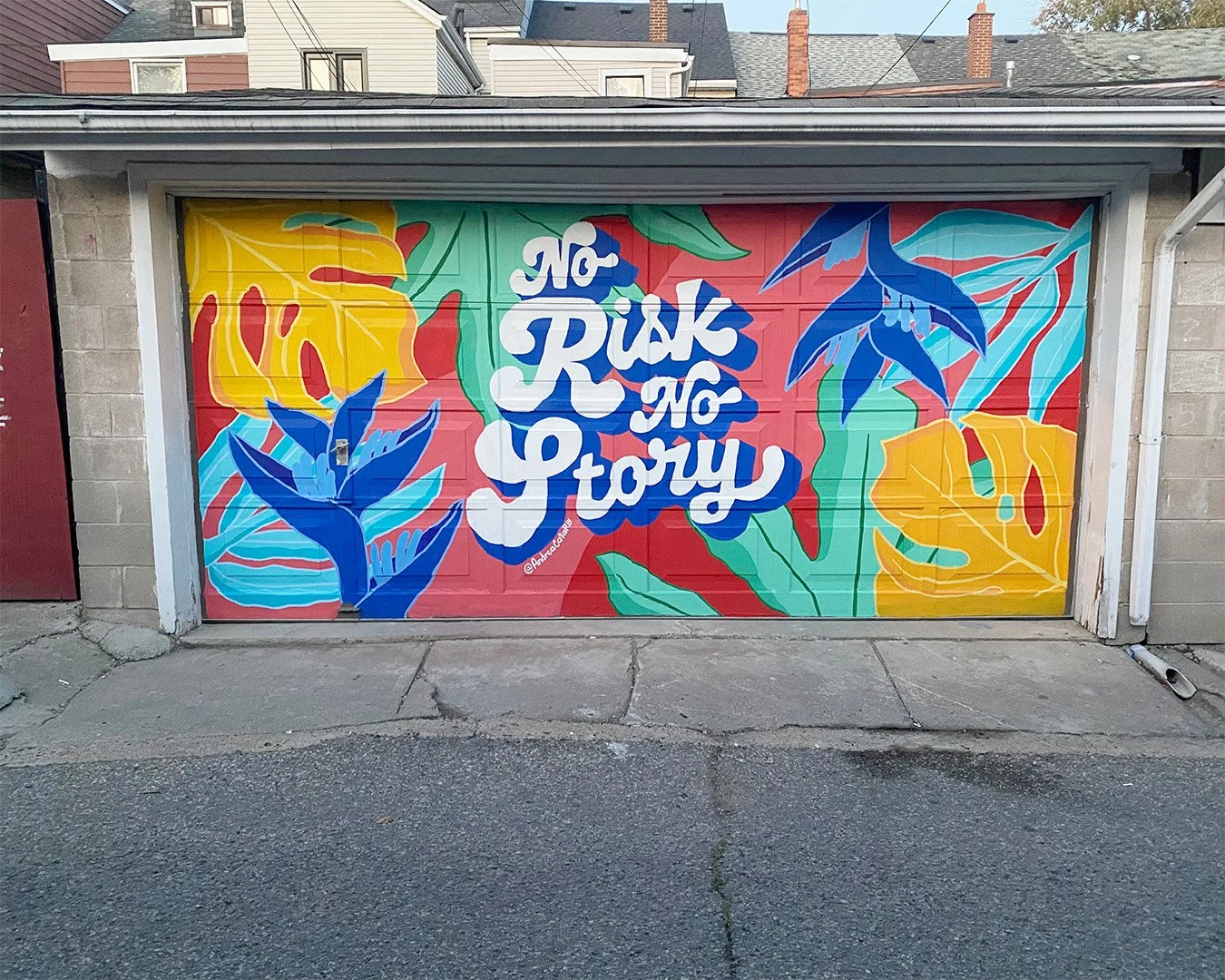
A finished outdoor mural should look beautiful, but it also needs to be planned to survive real life.
A garage door, for example, might seem small compared to a full building wall, but it still requires design, materials, prep, time, and skill. It is not "just a quick painting job," and it is definitely not something artists should be expected to do for free.
So, which one is better?
Neither indoor nor outdoor murals are better. They just serve different purposes.
An indoor mural can completely change the feeling of a café, office, studio, school, restaurant, or retail space. It can create warmth, personality, a photo moment, or a stronger sense of identity.
An outdoor mural can make a building more visible, add colour to a neighbourhood, create a landmark, or bring public art into everyday life.
The best choice depends on the wall, the goal, the budget, the timeline, and how people will experience the artwork.
Thinking about a mural?
If you are planning an indoor or outdoor mural in Toronto, the best place to start is with a few photos of the wall, rough measurements, and a short description of what you are hoping the mural will do.
From there, we can talk about what the space needs, what materials make sense, what kind of access is required, and what timeline would work best.
A mural should feel exciting, but it also needs to be planned with care. That is how we make something beautiful that actually works in the space.