

What I Learned About Pricing My Creative Work
Pricing my work used to make me so uncomfortable. I could talk about colour, murals, lettering, ideas, design, workshops, materials, all of it. But the second someone asked, "How much would this cost?" I would feel my stomach drop a little. Part of it was confidence. Part of it was not wanting to scare people away (because it happened many times). And part of it was that no one really teaches artists how to price the parts of the work that people do not see.
Because the final artwork is only one part of the project.
Before the final visible part, there are emails and sketches, meetings, revisions, sourcing materials, travelling to see the site, and the so-loathed admin. Then we have site prep, cleanup, file setup, installation, thinking time, problem-solving, and all those "how can I" and "what ifs" moments. All the "not-so-little things" that make the work possible, before anyone sees the finished piece.
For a long time, I thought pricing was about finding the perfect number. Now I think pricing is about being honest about what the work actually takes.
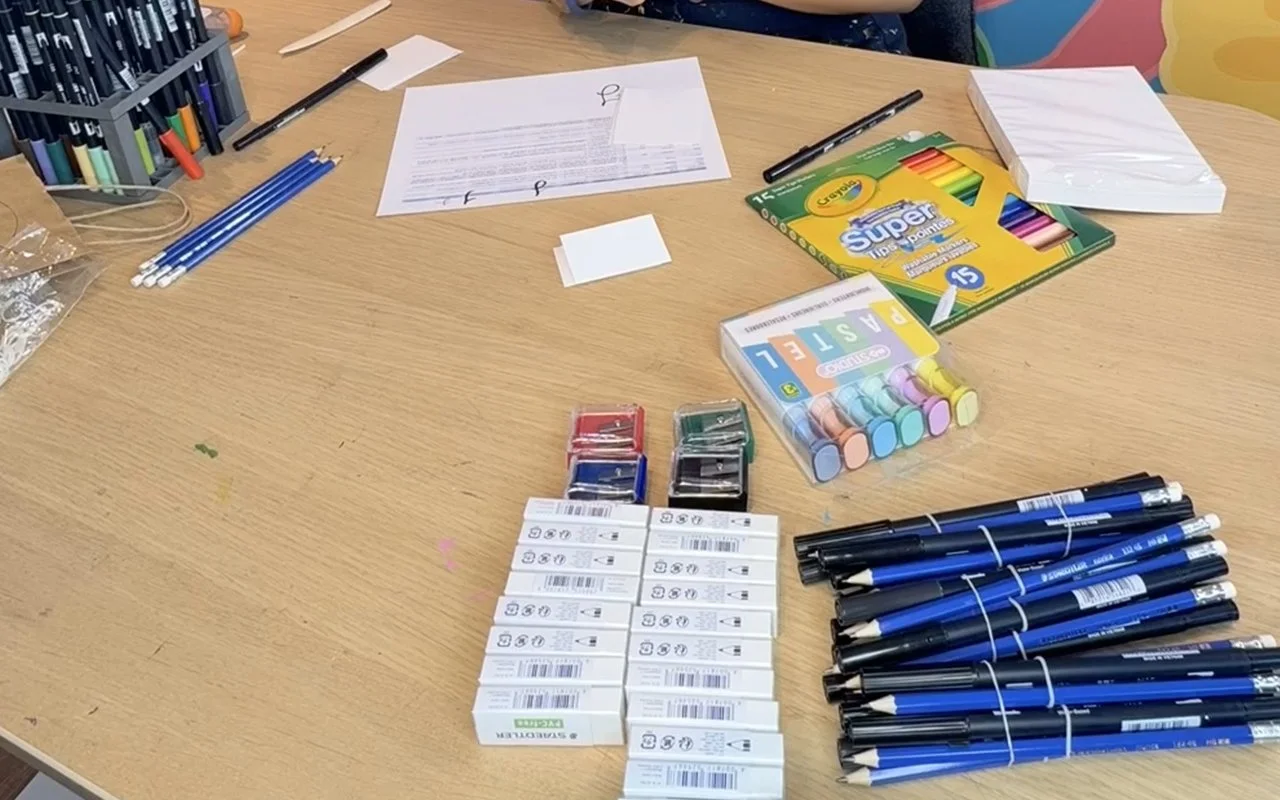
AndreaCataRo planning creative workshop
The price is not just the time spent making.
One of the biggest mistakes I made early on was focusing only on the time I spent physically making the thing. But creative work is rarely just the making part. A mural is not only the days I spend painting, nor is a workshop only the hours I spend in the room, and neither is a design project only the final file I send at the end.
There is a whole process behind it, and that process takes time, energy, experience, and care. When we charge only for the visible part, we end up absorbing the rest (the rest of that list at the beginning of this post).
That time counts too.
Experience has value
It can feel weird to charge more as you gain experience, especially when you are used to feeling grateful for every opportunity.
People are not only paying for your hands. They are paying for your eye, your taste, your judgement, your process, your communication, and your ability to make decisions when things get messy.
With time, you learn what questions to ask. You learn which materials work better, and how long things actually take. You learn what can go wrong and how to avoid some of it. Though sometimes, no matter how much you have learned, some people will try to take advantage of you.
That knowledge did not appear out of nowhere. You earned it by doing the work.
So yes, your prices are allowed to grow as your experience grows.

AndreaCataRo working on a lettering mural project, showing the skill and experience behind the final artwork.
Undercharging feels kind, until it is not.
I understand why artists undercharge.
Sometimes you want the project, care about the client, want to be accessible, or you are scared they will say no. Sometimes you are still trying to prove to yourself that your work is worth paying for. I have been there.
Precisely for that reason, I can tell you that undercharging gets heavy fast. You say yes because the project sounds exciting, but halfway through, you realize the budget does not cover the time, materials, changes, or the level of care the project actually needs.
The majority of us care a lot, and I think that is the problem. We still want to do a good job, even when the project was not priced properly.
We absorb the pressure, work late, rush, stretch ourselves thin and quietly pay for the gap with our own time and energy.
That is not sustainable.
There are ways to make work more accessible without hurting yourself. You can offer a smaller version, a simpler scope, a payment plan, a community rate, or a clear package.
But the answer does not always have to be, "yes, for less."
Clear pricing makes everything calmer.
Pricing is easier when the scope is clear. Defining the scope or brief should be the first thing you do. Remember: a quick sketch is not the same as a full illustration, a small workshop is not the same as a multi-session program, and a simple mural is not the same as a detailed custom wall with design, revisions, materials, installation, and finishing.
When you explain what's included, the conversation feels less personal.
You are not just throwing out a number and hoping nobody gets mad. You are showing what the project involves.
Pricing can start to feel like you are defending your worth every time you send a quote. Yet, when the scope is clear, you can talk about the project instead: timeline, materials, revisions, access, usage, deliverables, all the real things that affect the price.

Final Sketch, Transfer into the portable mural, event paint-by-numbers activity
A quote is not a personality test.
A quote is not proof that you are greedy, difficult, expensive or not good enough. It is just information, and sometimes people say yes or no. Sometimes the scope changes, and sometimes the project is simply no longer the right fit.
That does not mean you did something wrong. Of course, if every quote is missing the mark, it is worth looking at what is happening.
One no is not a crisis; it is just part of running a creative practice.
Track what things actually take
You do not need a perfect pricing system to start. Just pay attention.
Track your time, enough to learn from your own work. How long did the emails, the sketching, and the revisions take? How much time went into buying materials, travelling, setting up, cleaning up, exporting files, writing the proposal, and sending the invoice?
All of that is part of the job.
After a while, patterns show up. You start noticing which projects always take longer than expected. You see where you need a minimum fee. You realize which requests need clearer boundaries. Pricing gets easier when you stop guessing and start looking at the real numbers.
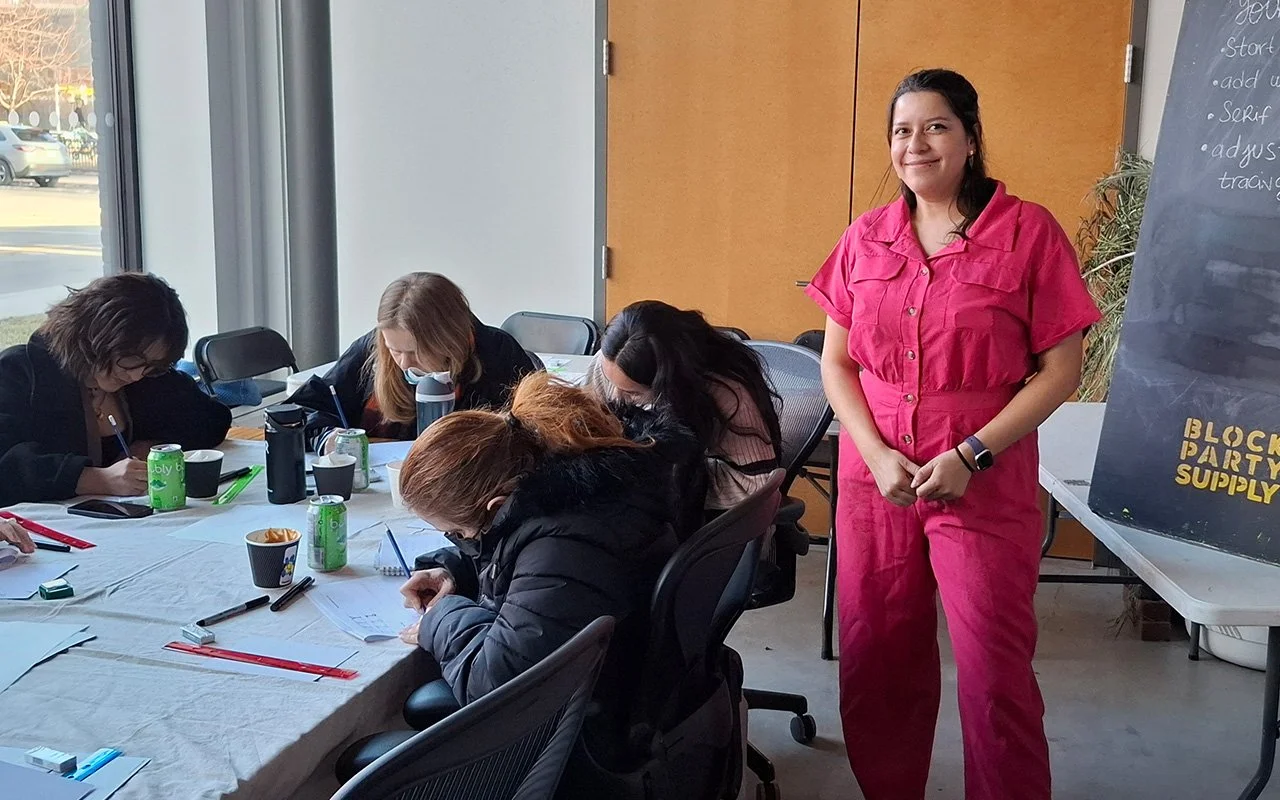
AndreaCataRo guiding a creative lettering workshop in Toronto
What I want artists to remember
You can care about your work and still charge for it.
Pricing does not make you less creative, nor does it mean you only care about money.
It means you are trying to build something that can last.
Want more support with your creative practice?
If you are an artist, designer, maker, or creative person trying to figure out pricing or build a more sustainable creative career, I offer workshops, mentorship, and creative entrepreneurship support grounded in real-world experience.
Related reading
Commissioning a Mural in Toronto
A good companion post for people looking to commission a mural.
Why I Create Workshop and Who They Are For
A related read about creating welcoming, useful workshops for artists, workplaces, schools, and communities.