

How to Prepare Your Space Before a Mural
A mural can completely change how a space feels, but before the paint goes on, there is always a bit of preparation.
This part is not always glamorous, but it matters. Murals are 90% plnning and 10% painting. A clean, accessible, well-prepared space helps the mural process move more smoothly and helps the final artwork look its best.

If you are planning a custom mural for your business, office, school, community space, restaurant, café, or home, here are a few things to think about before painting begins.
Start with clear photos and measurements
Before I can give a proper estimate or timeline, I usually need to understand the wall. A few simple photos can be incredibly helpful: one from far away showing the whole wall, one from close up showing the surface, and one showing the surrounding area.
Measurements are also important. Even rough measurements are better than guessing. The wall's height and width help determine the design's scale, the amount of paint needed, the timeline, and whether any special equipment might be required.

You do not need to make this complicated. Phone photos and basic measurements are enough to start the conversation.
Make sure the wall is ready
The wall does not need to be perfect, but it should be stable, clean, and safe to paint.
If there is peeling paint, loose material, water damage, heavy dust, holes, or cracks, those things may need to be addressed before the mural starts. For some walls, a primer may also be needed so the paint applies properly and lasts longer.
For indoor murals, this might mean wiping the wall, moving furniture, or patching small holes. For outdoor murals, this may mean pressure washing, repairing the surface, or ensuring the wall is dry before painting begins.
A little preparation goes a long way.
Clear the area around the wall
Before installation day, it helps to move furniture, plants, shelves, signage, merchandise, or anything that might block the wall. If the mural is in a business, it is also helpful to consider customer flow, staff movement, and whether the area needs to remain open during painting.
For larger murals, I may need room for ladders, scaffolding, drop cloths, paint, brushes, and other materials. If a lift is needed, the area around the wall needs to be safe and accessible.
The easier it is to reach the wall, the smoother the painting process will be.
Think about timing and access
A café may be busiest in the morning. A restaurant may need painting to happen before service. An office may prefer evenings or weekends. A school or daycare may need extra planning around children, staff, and safety.
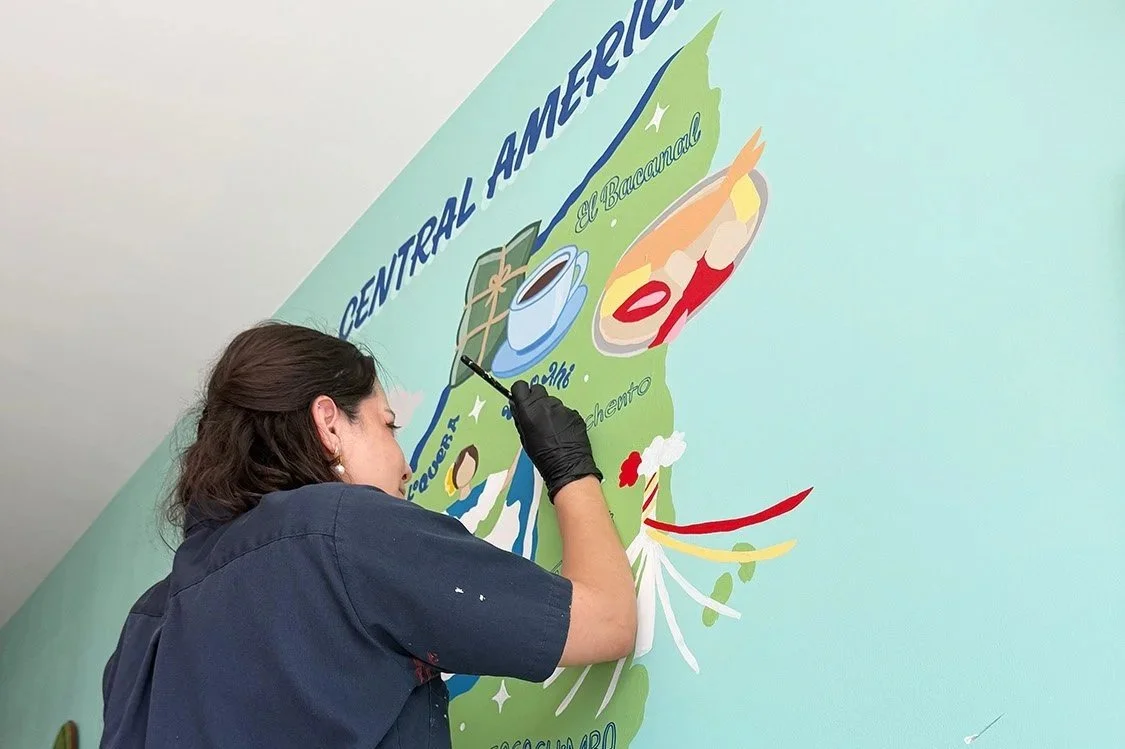
Before the mural begins, it helps to think about when the space is available and how much interruption is realistic.
If the mural is outdoors, timing also depends on the weather. Toronto murals usually need warmer, drier conditions, especially when exterior paint, primer, or protective coating is involved.
Good timing helps the project feel calm instead of chaotic.
Decide who gives final approval
Before painting starts, it should be clear who approves the final design, timeline, and any other important decisions. If multiple owners, managers, committee members, or community partners are involved, it helps to gather feedback before final approval rather than making changes in pieces.
Clear communication keeps the project moving.
It also protects the design. Murals are physical, large-scale artworks, so that last-minute changes can affect the timeline, budget, and final result.
You do not need everything figured out

Preparing your space does not mean you need to have every detail solved before reaching out.
You can start with a wall, a few photos, rough measurements, and a general idea of what you want the mural to do. From there, we can discuss what is possible, what needs to be prepared, and which mural would work best for your space.
A mural should feel exciting, not overwhelming. With a little preparation, the process becomes much smoother, and the final artwork has more room to shine.
Thinking about a mural?
If you are planning a mural in Toronto, send a few photos, measurements, and details about your space. I can help you understand what needs to happen before painting begins and how to bring your wall to life.
—
Related reading
What Makes a Good Mural Wall?
A helpful guide if you are still deciding whether your wall is the right fit for a mural.
Planning a Mural for Your Space? Read This First
A great next step for understanding what to consider before starting a mural project.
Mural Pricing in Toronto: What Impacts the Cost
Helpful if you are also thinking about budget, wall size, materials, access, and the level of detail involved.