
What Clients Don't See Behind a Mural Project
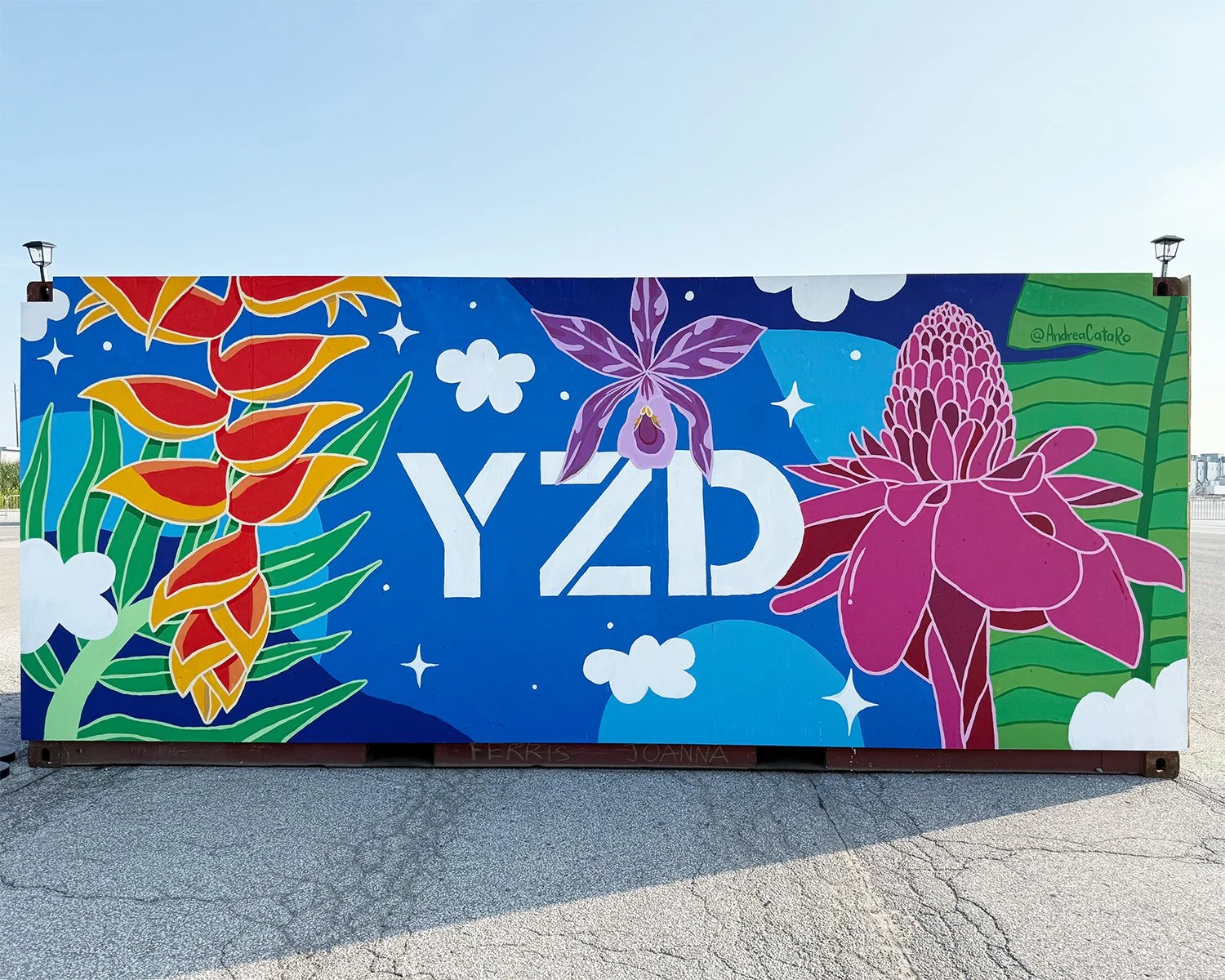
Completed large scale mural project in Toronto by mural artist AndreaCataRo.
When people see a finished mural, they usually see colour, scale, and impact. What they don't see is everything that happens long before the first brush touches the wall.
As a Toronto-based mural artist, I've learned that murals are as much about planning, coordination, and care as they are about painting. This invisible work is what allows a mural to feel effortless once it's complete.
The conversations that shape the mural
Every mural starts with listening. Before any design is created, there are conversations with clients, communities, and partners about goals, values, and context. Who is this mural for? What stories should it reflect? How will people interact with it?
For community murals and public art projects, this step is essential. It ensures the final artwork feels rooted in place and meaningful to the people who experience it every day.
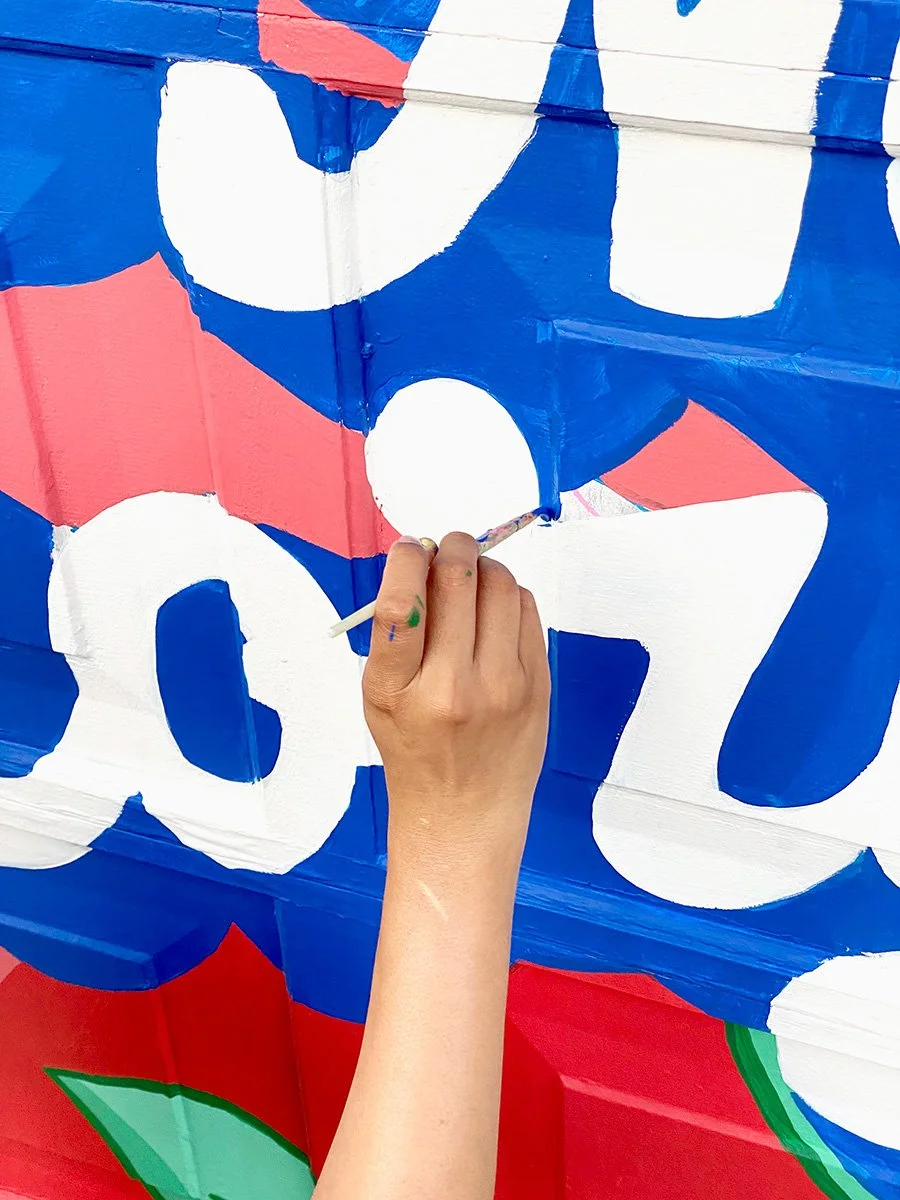
Close-up of mural painting in progress showing hand painted lettering and colour blocking
Design, revisions, and approvals
Once the direction is clear, the design phase begins. This includes research, sketching, colour exploration, and digital mockups. Designs often go through multiple rounds of feedback and refinement before being approved.
This process takes time, but it's what allows the mural to align with the space, the client's vision, and the surrounding environment. A strong mural design is intentional, not rushed.
Logistics, materials, and preparation
Before painting can begin, there is significant preparation behind the scenes. This can include sourcing materials, priming surfaces, coordinating site access, securing equipment, and planning timelines based on weather and site availability.
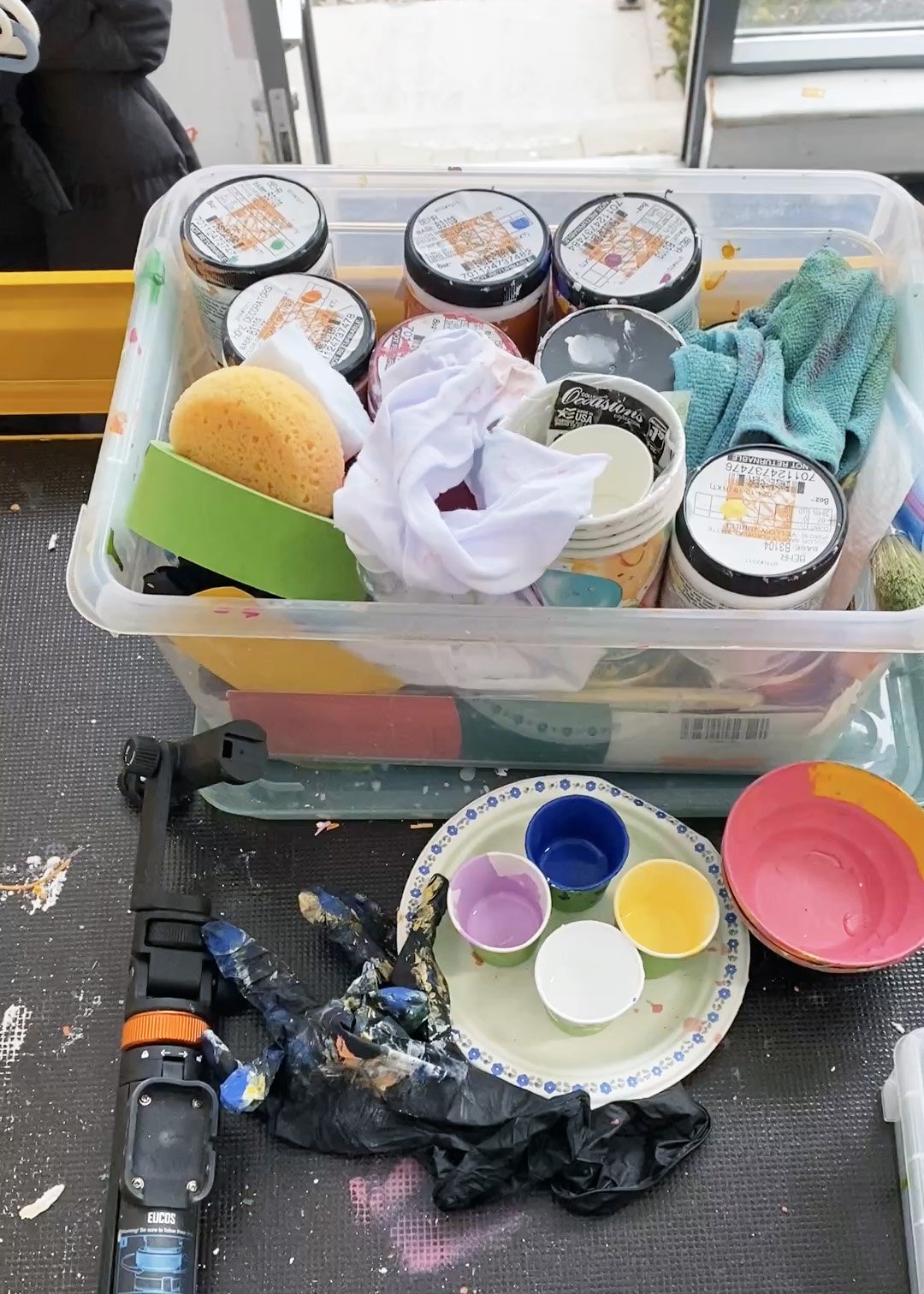
Mural project preparation showing paints, tools, and materials used before painting begins
For large-scale murals, safety planning is also a priority. Proper preparation protects the artist, the site, and everyone involved in the project.
Painting days and on-site work
The painting phase is often the most visible part of a mural project, but even this stage involves constant decision-making. Colours are adjusted in real time, surfaces behave differently than expected, and environmental conditions can change throughout the day.
Being on site means responding to the space, the light, and the people passing by. This is where planning meets intuition.
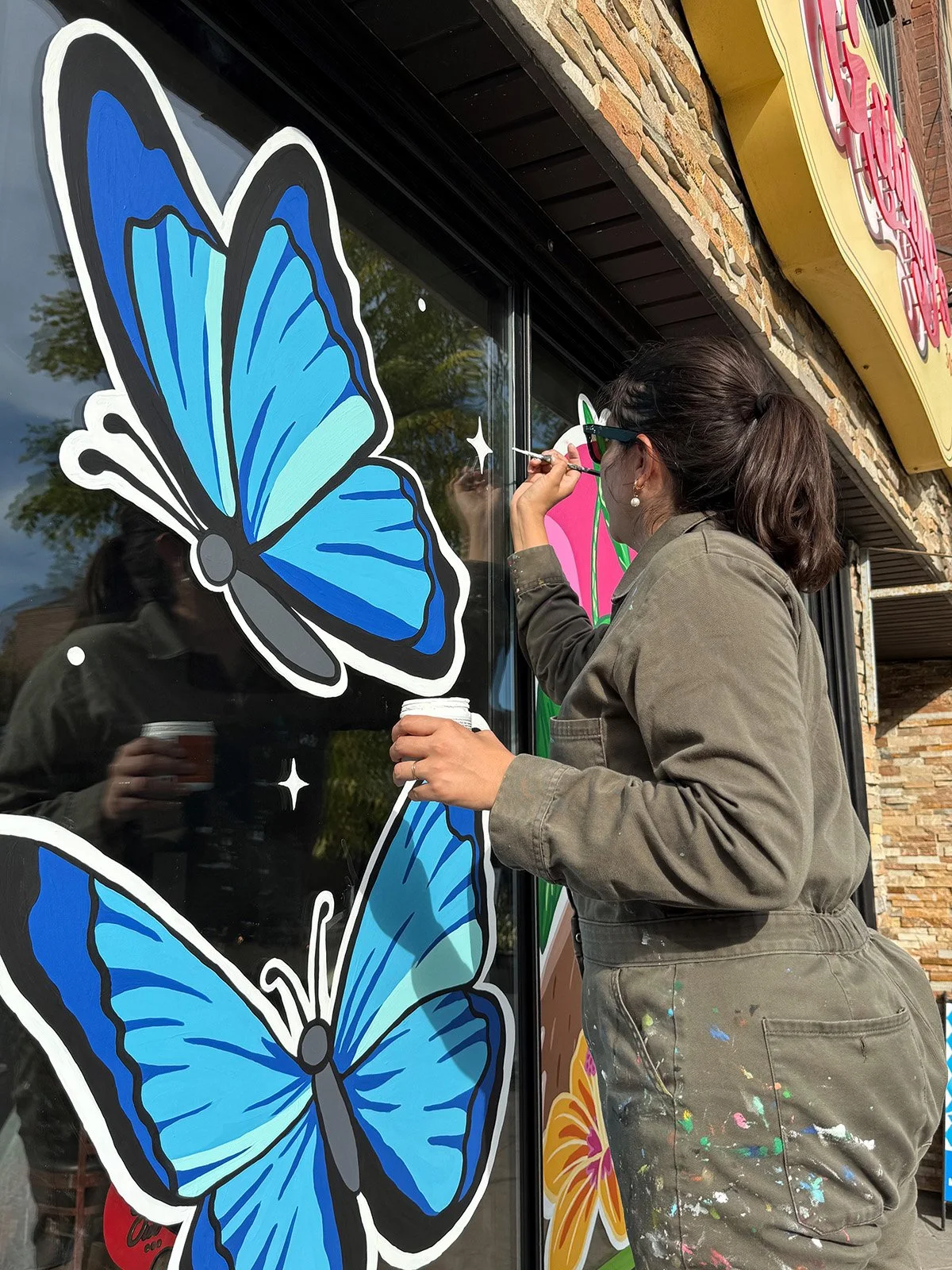
In progress mural painting showing colour blocking and design development
Why this invisible work matters
All of this unseen labour is what allows a mural to feel joyful, cohesive, and lasting. It's also why professional murals require thoughtful budgeting and realistic timelines.
When clients understand the full scope of a mural project, collaboration becomes smoother and expectations align more naturally. Transparency builds trust, and trust leads to better work.
If you're planning a mural or public art project in Toronto and want to work with an artist who values process as much as the final result, I'd love to connect.
A mural may live on the wall, but its foundation is built long before paint is applied.