

Resisting Through Art: Why Bad Bunny’s Representation Moved Me
This weekend, during the Super Bowl, I found myself thinking less about the game itself and more about representation. Mostly because, if I am honest, US football has never really been my thing. I live in Canada, I much rather watch basketball or hockey, and also, the Winter Olympics have my full attention.
But what caught me was not the sport. It was the moment. Who was visible? Who was at the centre of it all? And how my culture showed up on one of the world's biggest stages.
Seeing Bad Bunny woven into that global moment reminded me of something many of us from Latin America know deeply: Art is resistance. Presence can be political. Joy can be radical.
Representation is not decoration
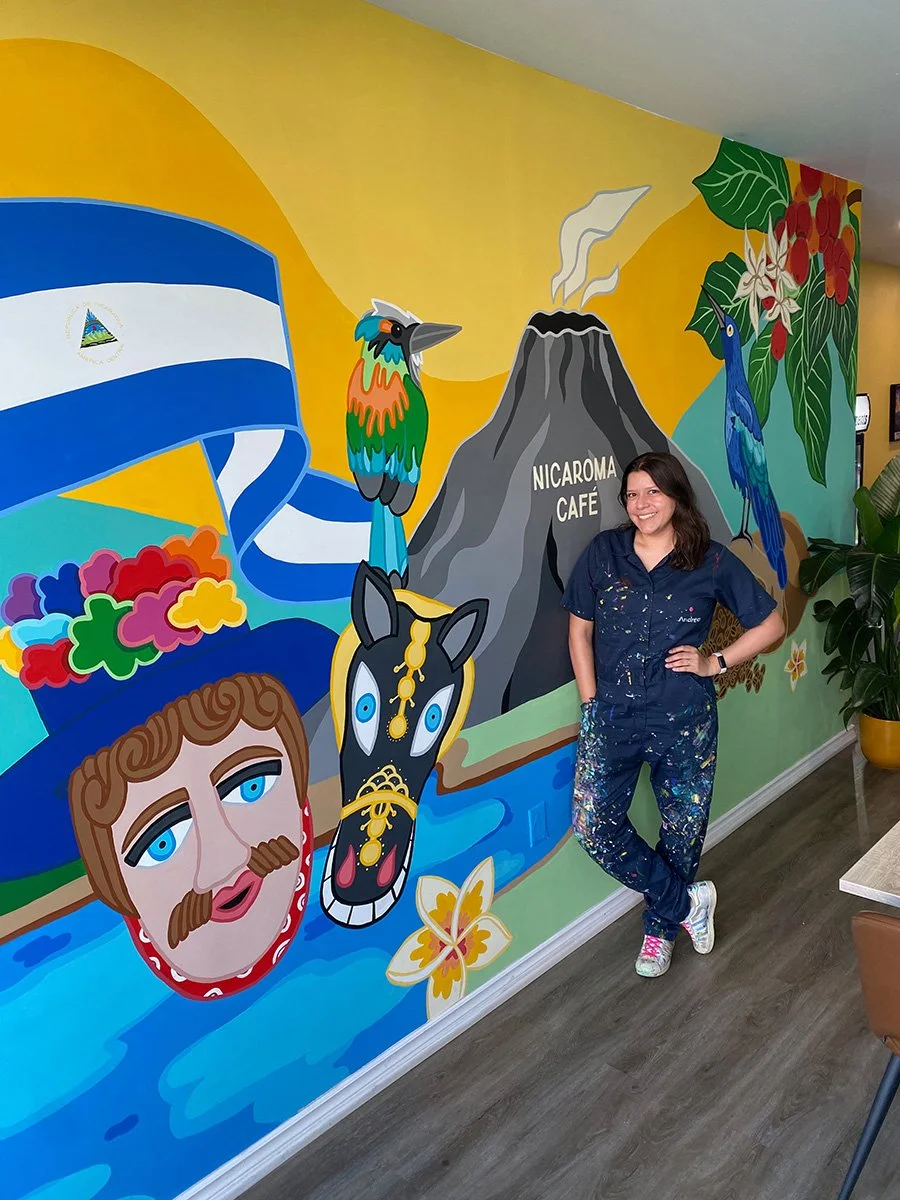
Andreacataro standing in front of a colourful mural inspired by Latin American culture and nature
Representation is not about ticking a box or adding flavour to a mainstream moment. As a Latina Canadian, I have often felt my identity being tokenized and included just because. It makes you question yourself. Am I here because I am good at what I do, or because someone needed to check a box?
Real representation is about being visible on our own terms. Language, accent, rhythm, references, and unapologetic identity matter.
For many of us, growing up meant learning how to navigate systems that were never built with us in mind. To see Latin Americanness exist loudly, confidently, and without translation on a massive platform is powerful. I am not going to lie. I cried. It made me feel seen. Like my colourfulness, my likeness, and my art actually matter.
What resisting through art looks like
Resisting through art does not always look like protest. Sometimes it looks like consistency. Like refusing to dilute your voice. Like continuing to create from your roots even when the world asks you to soften them.
A few years ago, another muralist asked me why my plants were always so colourful and happy, especially when I intend to raise awareness about nature, the rainforest, and the uncomfortable reality of land exploitation. She suggested I show more darkness. I did not say much. It is difficult to explain your relationship with identity. Even more difficult to explain to someone who is a complete outsider.
Latinos are often loud, colourful, and joyful, while carrying within us the sadness of deep social inequality, war, injustice, and colonization. Both things coexist. Always.
Bad Bunny represents that kind of resistance for me. Not because he is perfect, and not because his journey mirrors mine, but because he insists on existing fully as himself while occupying spaces that were never meant for him.
That insistence matters.
Many of us are doing this too
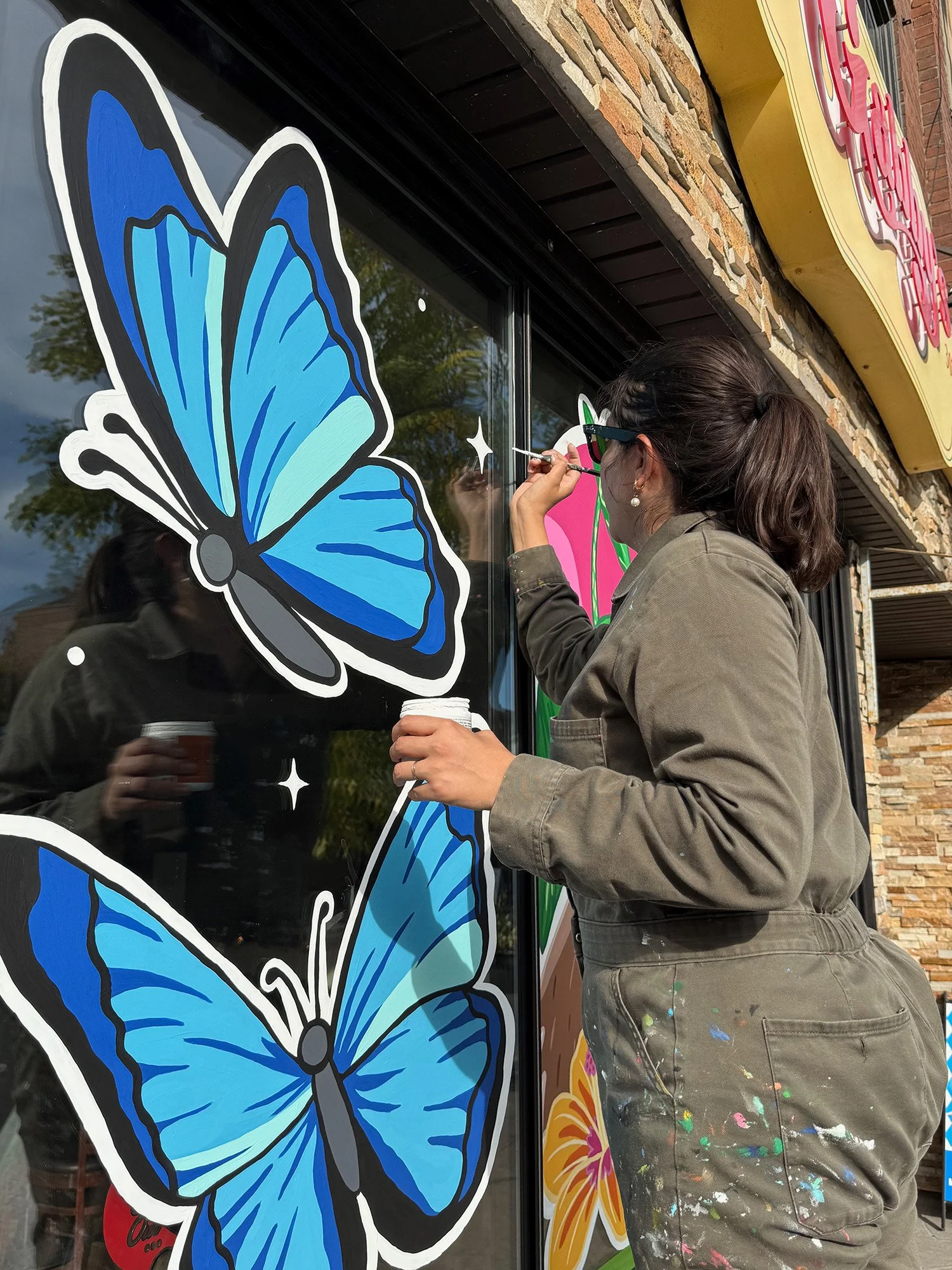
I see this same resistance in so many artists, designers, muralists, musicians, and creatives across the diaspora. People are building careers while holding onto culture. People choose not to erase themselves to be palatable.
I am still doing this, too. Through murals, workshops, community projects, and storytelling, I continue to ask how my work can hold space for where I come from and who I am.
This kind of work is slow. It is not always rewarded immediately. But it is necessary.
Why moments like this matter
Big cultural moments act as mirrors. They show us what is possible and who is allowed to take up space. When representation happens authentically, it sends a message far beyond the screen. It tells younger creatives that their language, their stories, and their references belong. It reminds those of us already on the path that we are not alone.
That is why I insist on being visible. On showing my face. On making sure people say it clearly: A Colombian artist, a Latina-Canadian. I did not have that kind of representation in high school, at university, or at work. But I want to be that for the incredible artists coming up now.
Because, as Benito said, believe in yourself.
Holding onto joy and resistance
Resisting through art does not mean carrying everything with heaviness. It can also mean choosing joy, humour, colour, and celebration as acts of defiance.
That balance is something I admire deeply. And it is something I continue to practise in my own work. Art has always been a way for communities to survive, remember, and imagine futures. Moments like this remind us why we keep showing up.
Because representation is not a trend. It is a responsibility.
And sometimes, it is a beautiful form of resistance.
Thanks for reading!
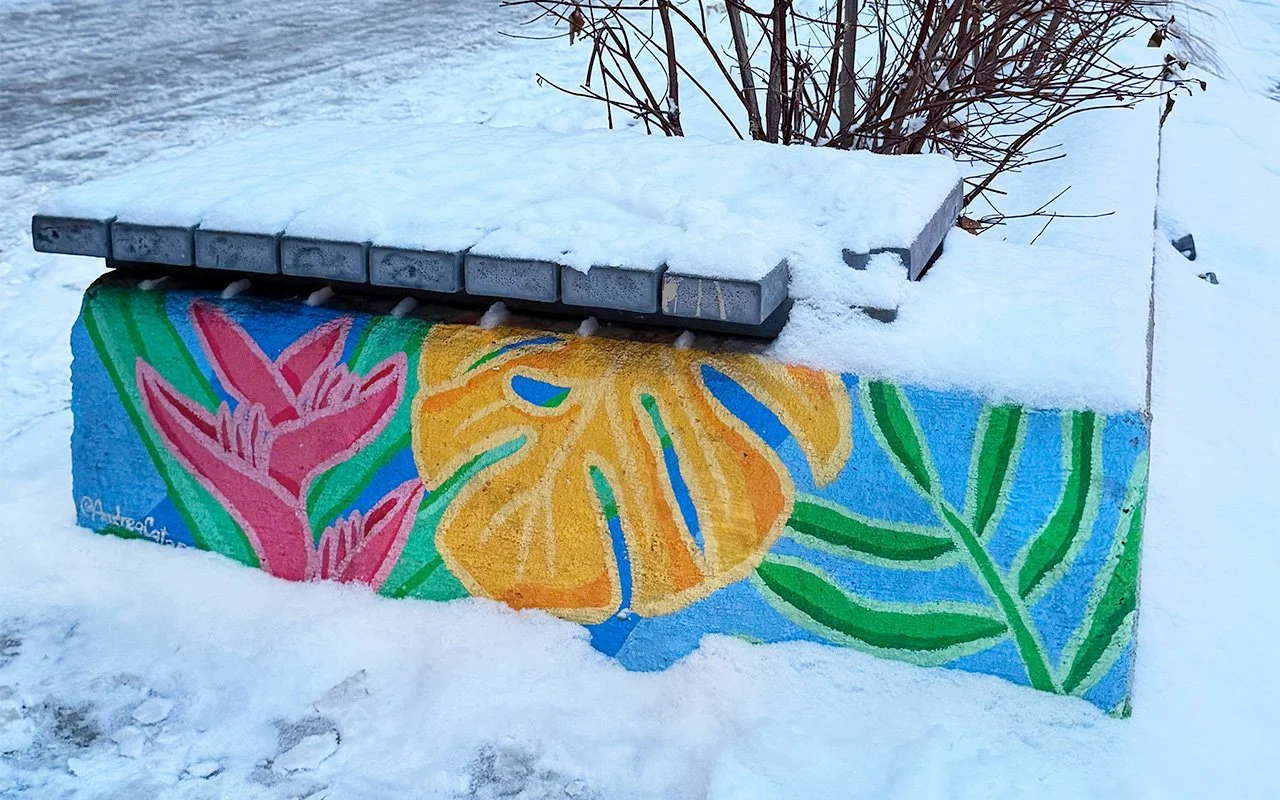
Colourful public art bench in Roncesvalles covered in snow, showing colour and warmth in a winter landscape