

Starting in Lettering Art
Starting anything new can feel intimidating, but the beauty of lettering art is that you do not need expensive tools or fancy equipment to begin. In fact, some of the best lettering artists started with the simplest materials and a lot of practice. Whether you are curious about lettering or already experimenting with it, here are a few basic tools that will help you get started.

Lettering art practice tools including pencil paper and ruler
HB Pencil
A simple HB pencil is perfect for sketching letterforms and practicing structure. You can use a standard wooden pencil or a mechanical one, whichever feels comfortable. Personally, I am a bit old school and still prefer a classic pencil.
Eraser
Every lettering practice session needs a good eraser. My personal favourite is the Staedtler Mars Plastic eraser. It is clean, precise, and perfect for refining letter shapes as you sketch.
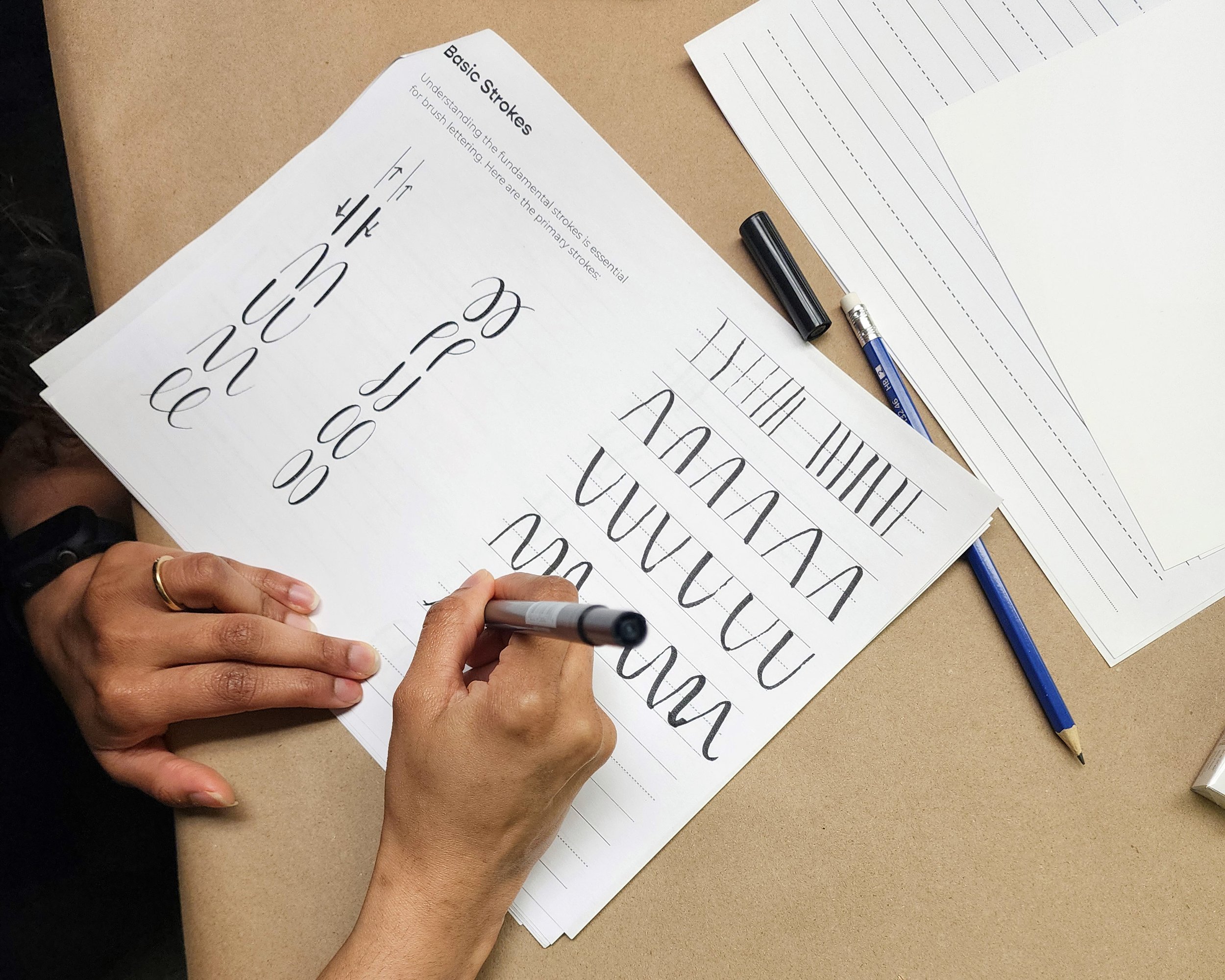
Lettering practice and refinement.
Paper
Plain white printing paper works wonderfully for practicing lettering. I am not much of a sketchbook person anymore. Sketchbooks started making me feel like every page had to be “Instagram worthy,” and that pressure is not helpful when you are learning. Loose sheets of paper make it easier to experiment and stay playful.
Ruler
You will quickly realize how useful rulers are in lettering. I have a whole collection: plastic, metal, long, short, square, and even curved rulers. They help guide baselines, spacing, and proportions.
Tracing Paper
This might sound a little old-fashioned, but tracing paper is one of the best tools for learning lettering. Even with tools like Procreate, Photoshop, Corel, or Affinity, practicing on paper teaches your hand and eye in a way digital tools cannot replace. Many professional lettering artists, including Martina Flor and Jessica Hische, rely heavily on tracing paper in their process.
Attitude
This might be the most important tool of all. Lettering takes patience and repetition. You have to be willing to trace, practice, and repeat shapes until they start to feel natural. The more you do it, the more your hand begins to understand the rhythm of the letters.
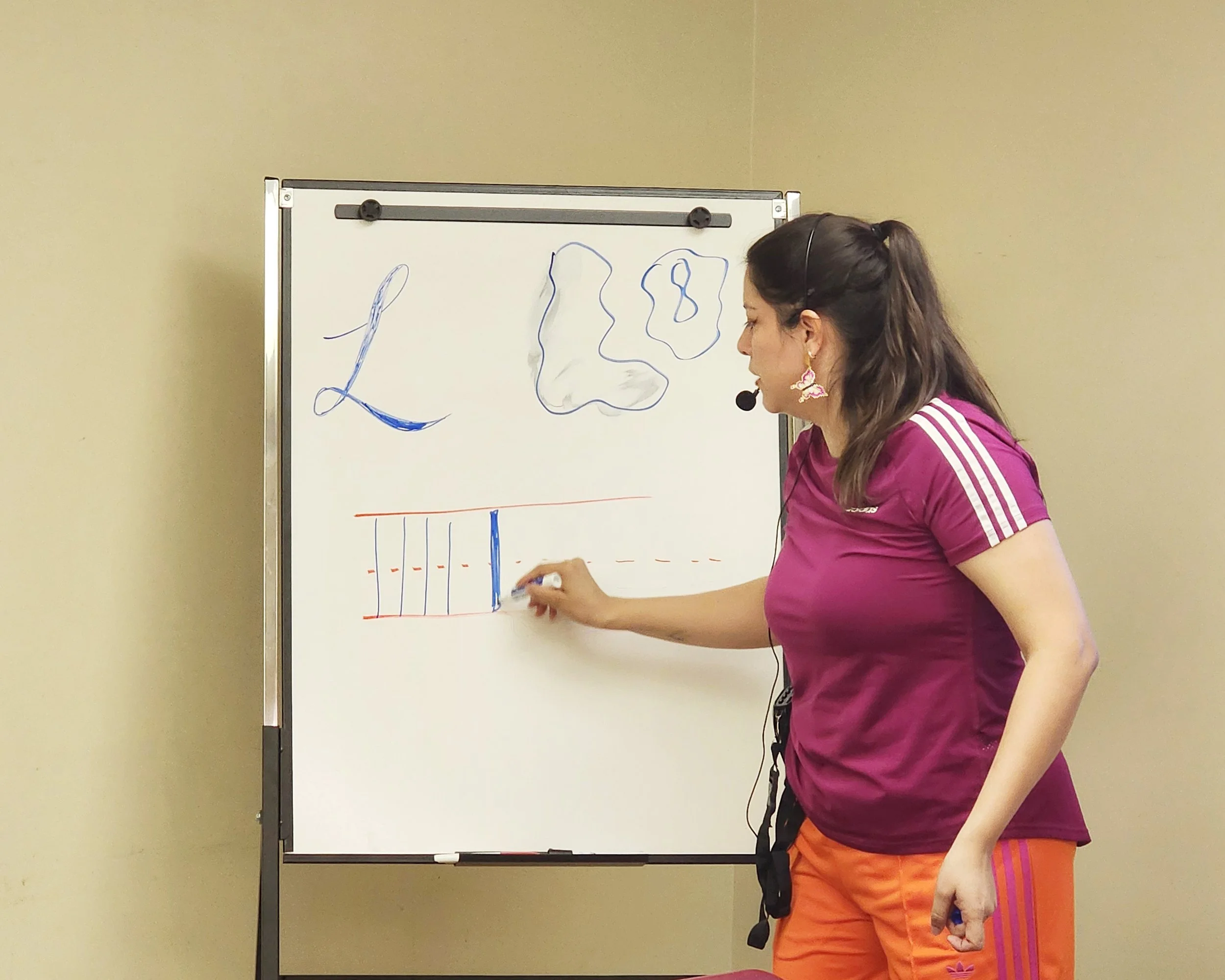
Andrea Rodriguez teaching lettering art techniques during a creative workshop.