
Why Toronto Needs More Culturally Rooted Public Art
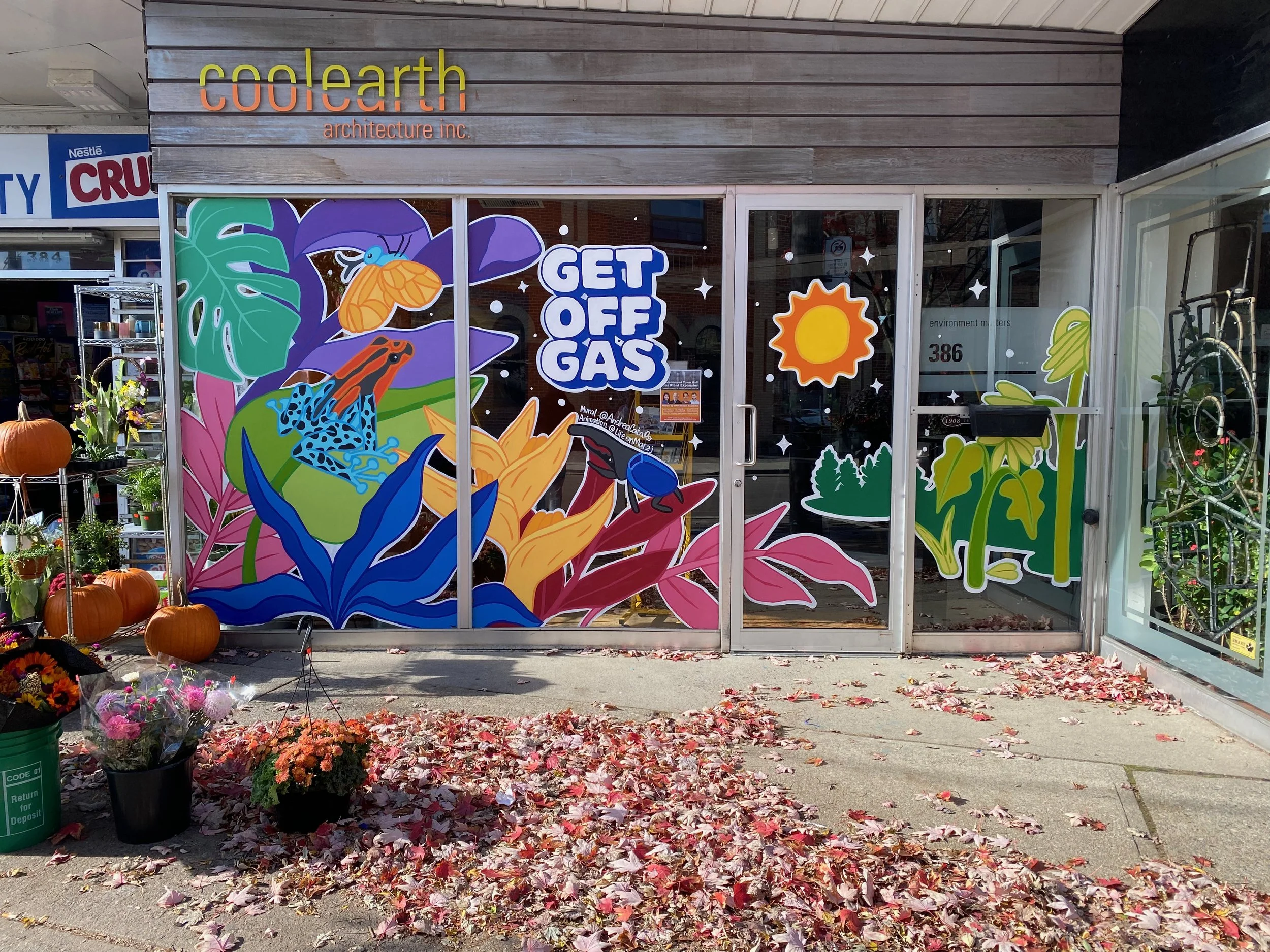
Public art mural in Toronto by Andreacataro reflecting culturally rooted design
Toronto is one of the most diverse cities in the world. We celebrate that fact often. We say it proudly: Diversity is our Strength. But when you walk through many neighbourhoods, you still have to ask a simple question: Does our public art truly reflect the people who live here?
Public art has the power to shape how a city feels. It influences who feels welcome, who feels represented, and who feels visible. When public art is culturally rooted, it becomes more than decoration. It becomes a mirror.
Public art is not neutral.
Despite what many people who curate public art would like to think, art in public space is never neutral. It carries values, references, and visual language. When those references are disconnected from the communities around them, something feels off.
Culturally rooted public art begins with listening. It asks who lives here. What stories are already present? What histories deserve to be seen? In a city like Toronto, where cultures overlap and evolve constantly, this kind of intentionality matters.
Representation builds belonging
When people see their culture reflected in murals and public installations, it creates recognition. Recognition builds belonging.
For immigrant, diasporic, and first-generation Canadian communities, public art can validate identity in powerful ways. It says, " Your language belongs here. Your colours belong here. Your stories belong here."
That message is not small.
Culturally rooted does not mean exclusionary.
Creating art from a specific cultural lens does not exclude others. In fact, it invites curiosity and exchange. It allows different communities to learn from one another visually.
The goal is not to create art that is only understood by one group. The goal is to create art that is honest about its origins.
Honesty resonates.
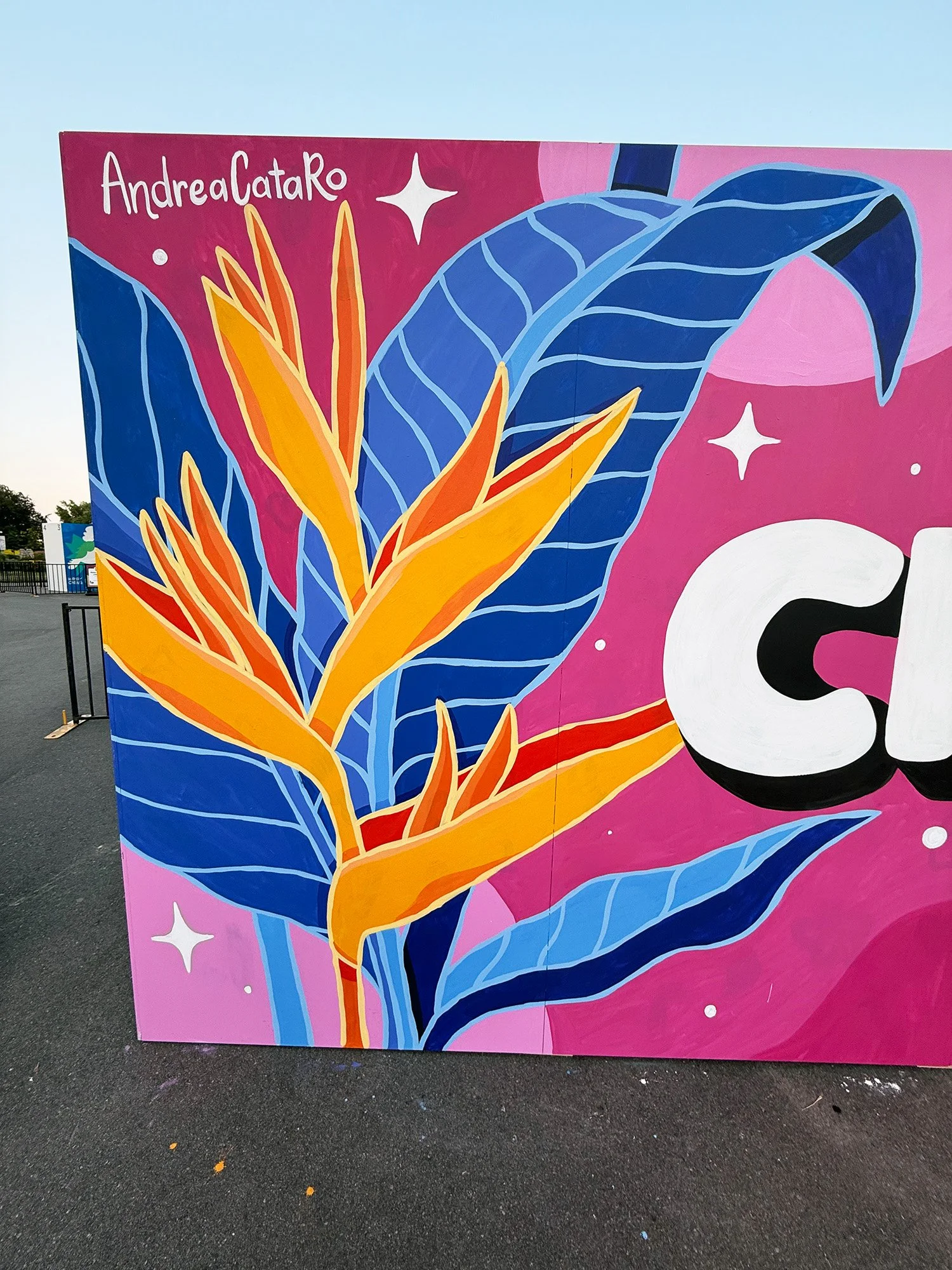
Detail of colourful mural inspired by Colombian and Latin American visual language
My perspective as a Colombian, Latina-Canadian mural artist
As a Colombian, Latina-Canadian mural artist working in Toronto, I often think about how my cultural background shows up in my work. Tropical plants, bold colour, layered symbolism, and references to land and memory are not aesthetic choices pulled from a trend. They are part of how I see the world. Bringing that lens into public art spaces in Toronto is my way of contributing to this city's visual language, not by replacing anything, but by adding to it.
What this could look like in practice
Culturally rooted public art can take many forms. Community-informed murals. Collaborative canvases. Projects that involve dialogue before design. Installations that reference neighbourhood histories or diasporic narratives. It requires time, care, and a willingness to move beyond surface-level decoration. If you’re curious about what the process of commissioning a mural in Toronto actually looks like, I wrote more about that here.
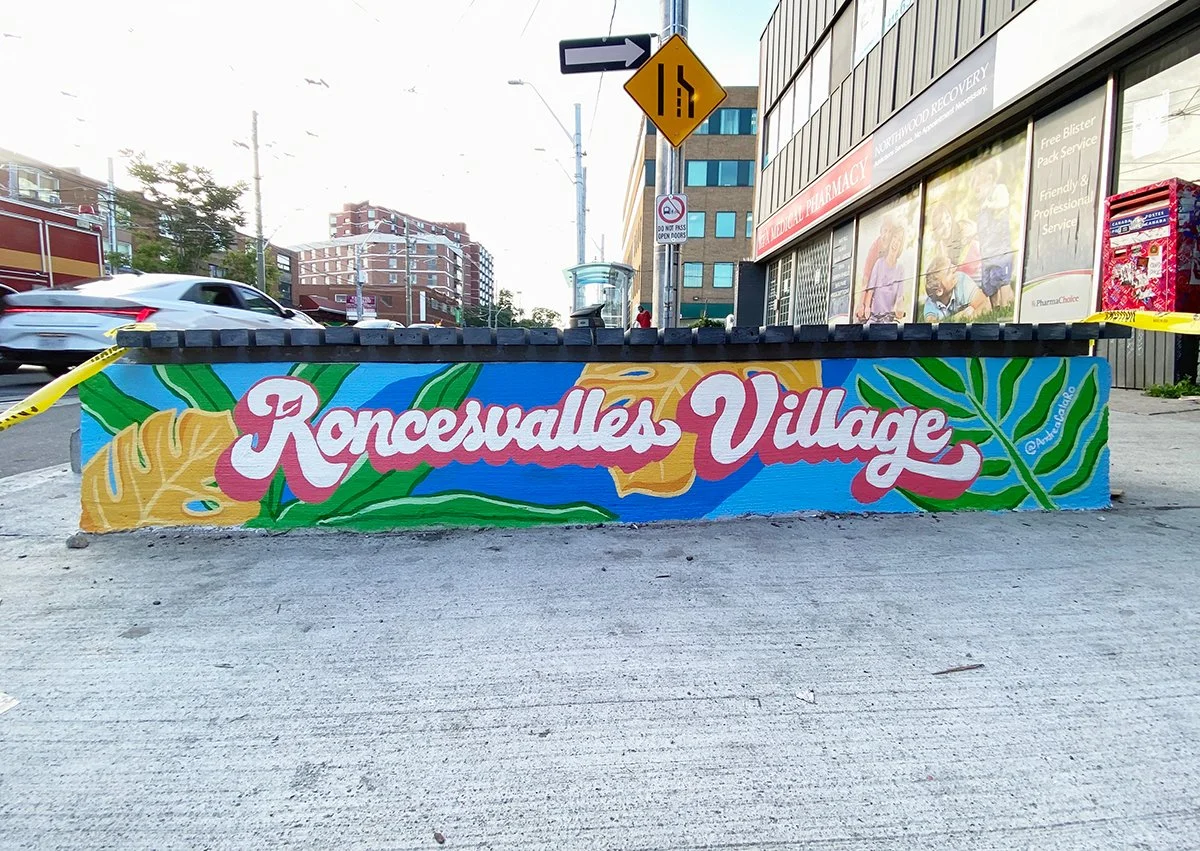
Public art in a Toronto neighbourhood reflecting community identity and culture
Why this matters now
As Toronto continues to grow and change, public art will play a role in defining what kind of city we become. Do we create walls that are visually pleasing but disconnected? Or do we create spaces that reflect the complexity and richness of the people who live here?
For me, the answer is clear. Public art should not just fill space. It should hold space. And in a city as diverse as Toronto, culturally rooted public art is not optional. It is necessary.